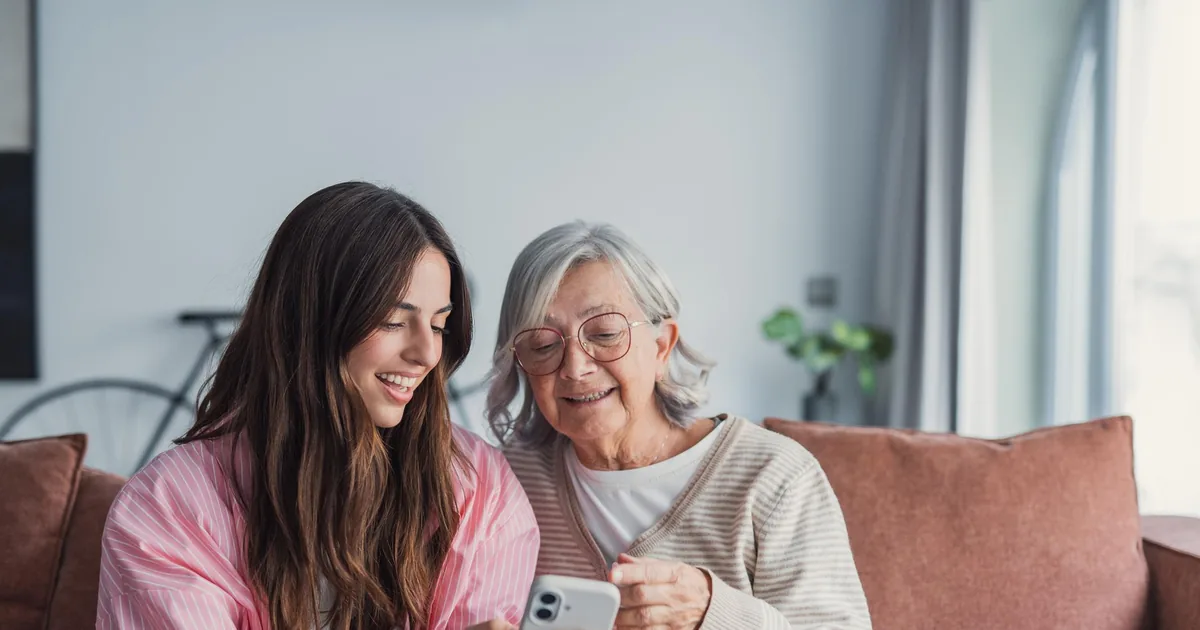
You can hear it on the Sunday call. She says she's fine. She always says she's fine. The garden's coming on. The Archers is still going. The boiler's behaving itself this week.
It's not the call that worries you. It's the rest of the week. The Tuesday afternoon. The Wednesday morning when the post has been and there's still a lot of day left. The bit between the call and the next call — which is most of life, really.
A growing number of UK families are doing something quietly practical about that. They're downloading Amara, a voice-only AI companion app their elderly parent can talk to in those hours.
What is an AI companion app for elderly parents?
An AI companion app for elderly parents is a voice-based application that provides conversation, cognitive stimulation, and day-to-day company for older adults living alone or spending long stretches of the day without family nearby.
The best ones don't feel like technology. They feel like a chat.
Amara is a voice companion app designed for older adults in the UK. There's nothing to tap, nothing to learn, nothing to figure out. If your mum or dad can pick up the phone, they can talk to Amara.
Inside the app are two voices, Mia and Max. Your parent picks the one they get on with. They listen. They remember what they're told. The next conversation picks up where the last one left off — the garden, the grandchildren, the chicken pie that did or didn't turn out.
How does the app work?
You download Amara from the App Store or Google Play. The first time it opens, it greets your parent and asks which voice they'd like to talk to. They speak; Mia or Max speaks back. That's the whole interface.
Over time, the voice they've chosen gets to know them. It remembers names, stories, preferences, what they're looking forward to that week. Conversations build on each other rather than starting from scratch every time.
Nothing has to be typed. Nothing has to be scrolled. The phone sits on the kitchen table or in their pocket, and they talk to it when they want to.
What can Mia and Max actually do?
What surprises most people is how much. A chat about the morning. A quiz about music from the fifties, or the rivers of Yorkshire, or last night's University Challenge. A reminder about a GP appointment. A story when the afternoon is long. A bit of help thinking through a recipe.
There's no test, no score, no marking. Just a chat. The whole thing was designed with older adults from day one — voice-first, no menus, no fiddly buttons.

Why UK families are using an AI companion app
Three things come up again and again when adult children describe what changed.
The first is that the afternoons stopped being so quiet. One family reported that their mother had started telling Mia about her father's allotment — stories she hadn't shared in years. Something about having a listener, a patient one, had opened things up.
The second is that the Sunday call got better, not worse. The fear with anything like this is that it replaces the family conversation. In practice, the opposite tends to happen — your parent has more to talk about, not less, because something has been happening in their week.
The third is that it isn't a faff. There's no setup process to walk an 82-year-old through. You download the app, hand them the phone, and they start talking. The first conversation is the onboarding.

Why daily conversation matters for older adults
There's good evidence — from the NHS, from Age UK, from major UK research — that staying socially and cognitively engaged is one of the things that helps us age well. Talking, listening, being heard.
Age UK estimates that 940,000 older people in the UK are often lonely. More than a million older people say they go over a month without speaking to a friend, neighbour or family member. Among over-65s who are often lonely, nine in ten are also unhappy or depressed.
The 2024 Lancet Commission on dementia prevention named social contact as one of the modifiable factors linked to ageing well — which is part of why staying in regular conversation matters as we get older.
Amara is something to have that conversation with, for the hours when no one else is about.
Frequently asked questions
Is Amara just a robot pretending to care?
Mia and Max don't pretend to be anything they're not. They listen, they remember what they're told, and they talk back. They're somewhere to put the things your parent would otherwise keep to themselves — and most people find that more valuable than they expected.
Will my elderly parent actually use it?
Most do, once they've had the first conversation. The voice-only design means there's no learning curve — if they can hold a phone conversation, they can talk to Mia or Max. The first week of the trial is usually enough to find out.
Doesn't an AI companion app replace real contact?
No. Amara fills the hours your visits and calls can't reach. The good visits stay good visits. The phone calls stay phone calls. Amara is what happens in between — and most families find the quality of the real contact actually improves, because their parent has more to talk about.
What happens to my parent's data?
Your parent's conversations stay theirs. Nothing is sold, nothing is shared with advertisers, anything can be deleted. Amara is built by a small team in Berlin, under UK and EU data protection rules.
Does Amara work with regional UK accents?
Yes. Yorkshire, Scouse, Geordie, Glaswegian, Welsh — Mia and Max are designed to understand UK regional accents clearly, without being patronising about it.
How much does Amara cost?
Seven days free, no charge until day eight. Cancel any time before then if it isn't right. After the trial, from 18p a day — less than a daily newspaper.
How to try Amara
Download Amara from the App Store or Google Play. Set up the free trial — seven days, no charge until day eight. Give the phone to your mum or dad. They speak; Mia or Max speaks back. That's it.
If it isn't earning its keep after a week, cancel. If it is, your parent has something to look forward to on the Tuesday afternoons. Most of life, really.
Try Amara free for seven days.
7 days free. Cancel anytime before day eight, no charge.
Try Amara FreeFrom 18p a day · 7 days free · cancel anytime